As builders look beyond energy efficiency and sustainability, wellness is emerging as the next frontier in residential design.
The WELL for Residential certification, administered by the International WELL Building Institute (IWBI), offers a comprehensive framework for creating homes and communities that support residents’ health through everything from indoor air and water quality to walkability, access to nature, and social connection. While the standard is still relatively new, early adopters are helping define what wellness-focused home building looks like in practice.
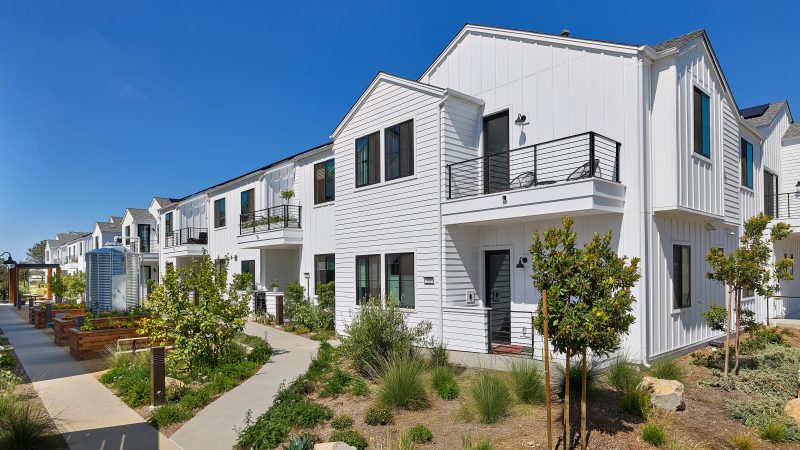
Shea Homes became one of those pioneers when Fox Point Farms in Encinitas, California, earned WELL for Residential certification late last year, making it the first community in the state to achieve the designation. The 21-acre agrihood combines 250 homes with a regenerative farm, walkable amenities, and wellness-focused design strategies.
“Becoming California’s first community to earn WELL for Residential certification is a tremendous honor for Shea Homes,” said Paul Barnes, division president of Shea Homes San Diego, at the time. “This achievement reinforces our belief that homes should do more than provide shelter—they should be designed to enhance comfort, connection, and quality of life. We’re proud to help demonstrate what’s possible when wellness and sustainability work hand in hand.”
BUILDER spoke with Barnes about the certification process, how WELL influenced the community’s planning and design, and what other builders can learn from the experience.
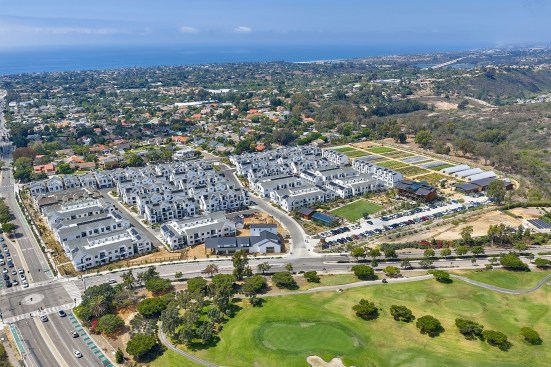
Courtesy Shea Homes
From a home builder’s standpoint, what does WELL for Residential certification actually mean in practice?
From a builder’s perspective, WELL for Residential is about being intentional—designing homes and communities that actively support how people live, feel, and function every day. In practice, it means evaluating everything from air and water quality to material selection, acoustics, lighting, walkability, and social connection. It’s not a single feature or system—it’s a framework that helps guide hundreds of small decisions toward a healthier, more livable outcome for residents.
What steps did the team have to take to get WELL certification for Fox Point Farms?
It started very early, well before vertical construction. We worked closely with our design, engineering, and construction teams—as well as IWBI—to align on the WELL framework at both the home and community level. That included integrating enhanced air and water filtration, selecting low-emission materials, planning for movement and access to nature, and thinking holistically about how people interact with shared spaces. Importantly, it was a collaborative process—WELL isn’t something you “add on” at the end; it has to be embedded throughout planning, design, and execution.
How did pursuing WELL for Residential influence design decisions early in the planning phase?
WELL reinforced many instincts we already had, but it also pushed us to be more disciplined. It influenced site planning, how homes were oriented, how pathways and paseos connected the community, and how shared amenities encouraged daily movement and interaction. It also informed quieter decisions—like acoustics, daylighting, and mechanical systems—that residents may not immediately notice but absolutely feel. Having WELL as a guiding lens early helped us avoid compromises later.
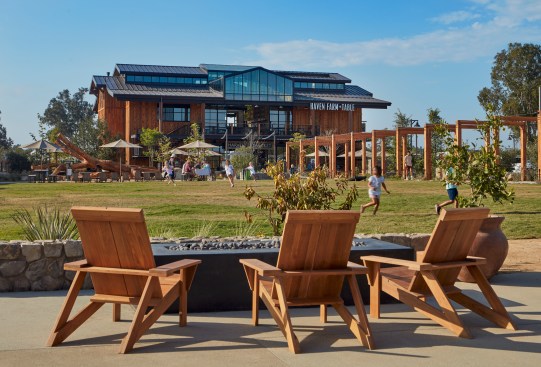
Courtesy Stephen Whalen
What were the most challenging WELL criteria to meet at the community scale, and why?
The community-scale requirements were the most complex, simply because they require coordination across many disciplines. Encouraging movement, social interaction, and access to nature isn’t just about adding amenities—it’s about how the entire community is stitched together. That meant careful planning around walkability, shared spaces, lighting, and how residents naturally cross paths. It’s more nuanced than a checklist, and it requires a long-term view.
How are buyers responding to WELL—do they understand it right away, or does it require education?
It often requires some education, but the response has been overwhelmingly positive. Buyers may not arrive asking specifically for WELL certification, but they immediately respond to the outcomes—how the homes feel, the connection to nature, the sense of community. Once they understand that these qualities are intentional and measurable, WELL becomes a powerful validation of what they’re already experiencing.
What lessons from Fox Point Farms will directly influence future Shea Homes communities?
The biggest lesson is that wellness works best when it’s integrated—not isolated. Fox Point Farms reinforced the value of designing communities, not just homes. We’ll continue to apply what we learned about air and water quality, material selection, and thoughtful community planning across future projects, whether or not they pursue full certification. WELL has helped raise the bar internally.
If another builder wanted to pursue WELL for Residential, what would you advise them to prioritize first?
Start early and align your team around a shared philosophy. WELL is most successful when architects, planners, engineers, and builders are all working toward the same goal from day one. I’d also encourage builders to focus first on fundamentals—air quality, water quality, and thoughtful site planning. Those elements have the greatest impact on daily life and are the foundation for everything else.