Harry Whitver
Engineered-wood I-joists are arguably a better-performing and more resource-efficient option to solid-sawn 2×10 and larger roof and floor joists, what with their longer span capabilities, stiffness, stronger load capacities, superior structural integrity in fluctuating climate conditions, and more efficient use of timber.
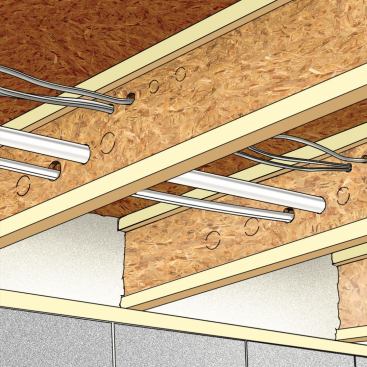
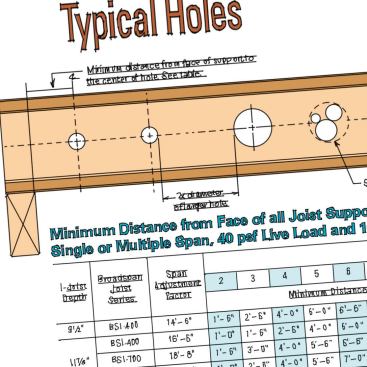
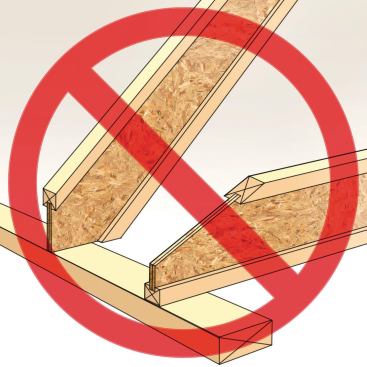
But there are other, more subtle differences in their on-site applications compared to their solid-sawn counterpoints, including how and where framers are allowed to cut holes in the thin web of an I-joist for mechanical runs and whether and where the chords of these long-span beams can be notched. An improper hole or notch can result in squeaky floors, or far worse.
I-joist manufacturers and suppliers go to great lengths to make sure designers and framers understand those limitations—in some cases designing floor and roof systems on their behalf to mitigate miscuts—but they still come across improper holes and notches in the field.
Consider these tips for I-joists, and consult your local I-joist supplier for more details.