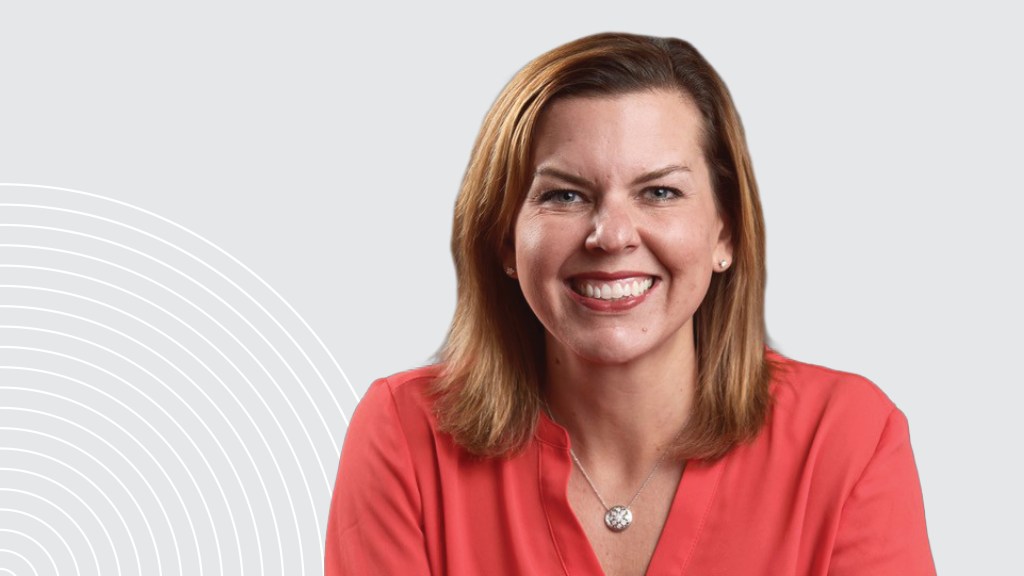
With deep knowledge and experience in multifamily, Kelli Lawrence sees build-to-rent and for-sale projects through a unique lens. As CEO of Onyx+East, Lawrence leads the vision and growth strategy while overseeing corporate operations, culture, and growing capital relationships.
In her nearly three decades in development, she has led the planning and construction of over 4,500 for-sale and rental homes throughout the Midwest and Florida. Ahead of her session at the Build-to-Rent Conference in Phoenix, BUILDER caught up with Lawrence to learn more about how she applies her multifamily experience to BTR and for-sale development.
After spending 18 years in multifamily development, what was the biggest mindset shift when you stepped into your role at Onyx+East?
The biggest shift was realizing that home building requires a fundamentally different operating model, and mindset, than multifamily.
Construction and delivery are completely different. The subcontractor base, contracting approach, sequencing, and field management required for home building are different and require different systems, processes, and partnerships for success and scalability in BTR.
Build-to-Rent Conference
April 13-14, 2026
JW Marriott Phoenix Desert Ridge Resort
Hear more from Lawrence during her session “Where Multifamily Meets BTR: Lessons From Both Sides of the Field,” moderated by Kimberly Byrum, on April 14.
Another major shift was rethinking amenities. In multifamily, we poured time and capital into shared amenities, becoming an amenity “arms race.” In BTR, residents care far more about what’s inside their home and immediately outside their front door. Their garage, their yard, their block matter more than a clubroom.
Every home is a deeply personal decision. People emotionally anchor to their front door. And in BTR, longer tenancy is the goal, so design has to balance efficiency with stickiness—layouts, features, and neighborhoods that make people want to stay.
Finally, entering a new market is harder as a home builder. You can’t easily outsource your way to success in multifamily with third-party contractors and property managers. Building a trusted for-sale brand requires significant investment in operations, sales, and marketing—and that brand promise has to be delivered consistently at the home level.
When you think about expanding into a new market, what’s usually the first thing that makes you say, “Yes, this feels right” or “Not yet”?
For us, it starts with access and insight, not just market size. First, can we get into the land deal flow? We buy raw land, so developing strong local relationships matters. If we can’t consistently see opportunities early and understand why a site is available, that’s a real limitation.
Second, do we truly understand why people are moving there? Is it job growth, schools, lifestyle, or cost of living? That distinction matters. We compete best on lifestyle and design in premium submarkets, not purely on price. If affordability is the only driver, that’s usually not our sweet spot.
Third, we study who’s successful in the market and why. Which submarkets have demonstrated staying power, not just a hot cycle? Are those areas still performing after interest rate shifts, cost inflation, or supply waves? And importantly, does our brand, strategy, and product actually fit those pockets of demand?
Fourth, can we execute at a high level? That means trade relationships, vendor sophistication, and depth of subcontractor capacity. Growth without execution discipline is a fast way to damage a brand.
Finally, we ask about scale and versatility. Within three years, can we realistically reach 200-plus homes annually and become a top 10 player in that market? And can we operate both for-sale and BTR there? As a private builder, that flexibility is critical for scale, capital efficiency, and long-term presence.
Things that make us pause:
- Markets with no real barriers to entry in premium submarkets.
- A constant stream of brokered deals with little differentiation, often a signal of saturation.
- A heavy pipeline of commodity housing disconnected from long-term job and population growth.
- Limited institutional capital interest, which affects both capitalization and exit optionality. Deep concentration of public home builders, especially those that target entry/first-time buyers also signals a submarket we would be very cautious to enter.
- Fragmented subcontractors and trade partner network.
How does your multifamily experience apply to your work today?
It applies to BTR, but also generally in how I look at sites, submarkets, and product design.
Multifamily teaches you:
- How density actually works, and why site design, views, and circulation determine whether it feels livable or crowded.
- Why long-term maintenance decisions matter just as much as first costs.
- How residents perceive value versus price—and whether added costs truly drive rents/pricing, leasing velocity, or retention.
- How operations reinforce, or erode, both brand and financial performance.
Those lessons translate directly into BTR, where the line between residential and hospitality continues to blur.
Because you oversee everything from strategy to culture, what part of your role takes more energy than people might expect?
Clarity and consistency. Being both a for-sale home builder and a BTR developer is inherently complex, especially as a private company working with multiple capital partners. The real work is helping the team stay confident in our long-term strategy without being overwhelmed by that complexity.
Most organizations don’t fail from lack of ideas. They fail from too many competing priorities. Saying no—clearly, repeatedly, and with conviction—takes more energy than people realize.
Through your work with the Urban Land Institute, what’s one trend or insight you’re especially excited—or cautious—about right now?
I’m encouraged by how housing has moved to the center of policy conversations, from the national level down to local municipalities. There’s growing recognition that housing is foundational to quality of life and economic competitiveness.
I’m excited about the renewed focus on density as a solution, but I’m cautious about the idea that density, and “missing middle” typologies, are often the silver bullet for affordability.
There’s a misconception that these housing types are inherently lower cost because they are dense, which is often not true. And they’re not how everyone wants to live.
We have to design solutions that address supply constraints and regulatory barriers and reflect how people actually want to live including the types of homes they desire as well as acceptance about the many reasons people choose to rent.
Being involved in both business and community organizations, how do those community leadership roles influence the way you lead day-to-day at work?
Community involvement gives you a front-row seat to how decisions ripple through neighborhoods, schools, and local economies. That perspective makes me more intentional about transparency, follow-through, and long-term relationships at work. Housing sits at the center of almost every community challenge and being able to contribute expertise locally is something I value deeply.
I also learn a tremendous amount from leaders outside of real estate, especially around strategy, operations, and technology. Those insights consistently influence how we continue to improve Onyx+East.