For 20 years, Klif Andrews has served as division president for Tri Pointe Homes Las Vegas. From working in financial spreadsheets to jumping into development, he has been immersed in the home building industry for most of his career.
As Tri Pointe, No. 15 on the current Builder 100, is now set to be acquired by Sumitomo Forestry, Andrews believes that a strong company culture will always produce better outcomes. And because experience is highly valuable in this industry, Andrews says culture is vital to keeping employees engaged and growing.
He says, “Culture replaces policy. When you build a strong culture, you don’t need a rulebook—people know how to operate because they care about the team and the mission. That mindset is reinforced by Tri Pointe’s leadership at every level, from the corporate office to each division.
“In Las Vegas, we’ve been intentional about carrying that culture forward in a way that feels authentic to our team. We’ve created a place where people feel supported, empowered, and part of something bigger. We’re a winning team that’s committed to each other, to the company’s values, and to delivering an exceptional experience to our buyers.”
Andrews shares more about his career, the Las Vegas division, and culture below.
Take us back to your first day in the home building industry…why home building?
I’ve always been drawn to building. I grew up in a construction family, worked in the field during my college summers, and eventually realized I wanted to pursue a career in real estate development. I earned a finance degree with a real estate concentration at Fresno State and tailored my college experience toward that goal. Having a clear focus really helped me by the time I was finishing school, because it helped me land my first job in 1988 as a financial analyst in Orange County. Funny enough, the job came down to knowing spreadsheets, which was rare at the time. From there, the rest unfolded naturally.
How has your career progressed since?
I worked in Orange County for nearly a decade before moving to Las Vegas in 1997 to join Pardee Homes. That’s when I fully immersed myself in home building. I transitioned from finance into project management thanks to a mentor who encouraged me to stop hiding behind spreadsheets and get into the action. That advice changed my trajectory. I eventually led the full development operation from land acquisition through construction. At our peak, we were building over 1,000 homes per year, with a team of 275 employees.
After the 2008 financial crisis, the division shrank to about 150 homes per year and 50 employees. But that season of contraction also brought clarity. Over time, and especially following our acquisition by Tri Pointe Homes, we evolved into a more focused, higher-end merchant home building division. For the past eight years, we’ve been expanding our offerings while staying grounded in our identity as a premium lifestyle brand. I’ve served as division president since 2006, and though the role hasn’t changed, the scope, strategy, and energy certainly have.
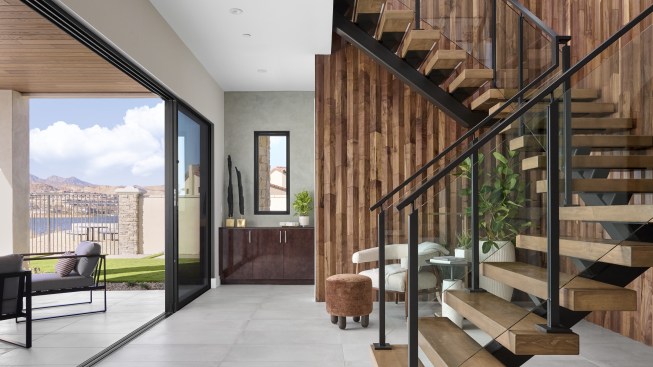
Courtesy of Damian Tsutsumida for Tri Pointe Homes
La Cova at Lake Las Vegas in Henderson, Nevada.
What do you enjoy most about the industry? What has been unexpected?
Designing and building homes is incredibly satisfying. It’s the most tangible product in the world because you can literally see it come to life and know it’s going to shape how someone else lives. For me, the greatest reward has been the people. I’ve had the privilege of working with immensely talented professionals who are experienced, passionate, and collaborative, and they’ve had a tremendous impact on me. Tri Pointe’s people are the secret sauce behind our success. Seeing what we can accomplish together as a team never gets old.
What has been one of the biggest challenges in your career so far?
Las Vegas is a cyclical market, and we’ve seen our share of ups and downs. One of the most difficult challenges was maintaining a premium lifestyle brand during market downturns, when price per square foot becomes the only metric some buyers focus on. But we stayed consistent by focusing on design, performance, and experience, which is how we earned our way out of those periods. The market has matured, and today’s buyers are more discerning. They expect more from their home and their builder, and we’re ready for that. The ups and downs will come and go, but you learn to build a team and business model that can flex through the cycles.
With two decades as division president, how has your perspective of leadership changed since?
I’ve seen how leadership has evolved to become more collaborative. Our team expects transparency and authenticity, especially our younger employees. They’re energized, hungry to learn, and highly team oriented. I’ve learned that coaching and empowering people works far better than top-down direction. It’s about creating environments where people can thrive and grow into leadership roles themselves. And yes, that sometimes includes having pajama days and stuffed animals in the office. It’s all part of a vibrant, inclusive culture that supports excellence.
What makes a great leader?
A great leader knows how to recognize talent, nurture it, and step back enough to let it grow. Leadership isn’t always innate–it’s often cultivated. We’ve seen team members start with limited experience and develop into incredible leaders through coaching and opportunity. We focus on hiring for culture, not just skill sets, and we strive to create a sustainable environment where people want to stay and grow. Experience is incredibly valuable in this business, and culture is the glue that holds it all together.
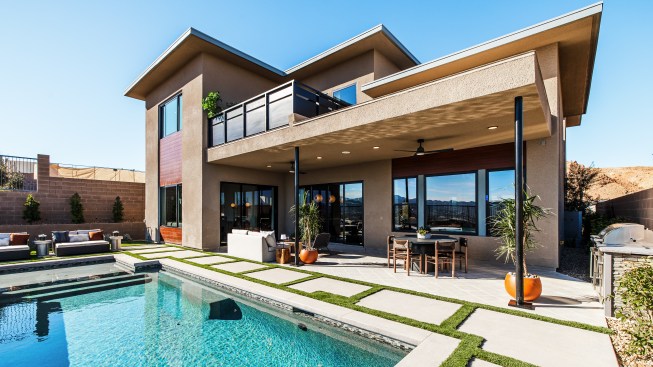
Courtesy of Mona Shield Payne Photography for Tri Pointe Homes
Lakeview Ridge at Lake Las Vegas in Henderson, Nevada.
What are three tips for employee retention?
First, employee retention starts with building a culture people genuinely want to be part of. That means leading with gratitude and being transparent. People need to feel a true sense of belonging.
It’s also vital to invest in development. We actively survey our team to understand where they want to grow, and we try to create opportunities for training across our various departments. Providing ongoing learning helps people feel valued and engaged in the bigger picture.
Just as important, you have to value the whole person. Giving people the space to show up as themselves builds trust and loyalty, and it creates a workplace where people want to stay and thrive.
How has the Las Vegas division’s strategy or focus changed (or not) over the years?
Las Vegas isn’t a traditional market–we’re able to take more risks here. We were the first builder here to bring contemporary architecture to the forefront, and we’ve leaned into it ever since. Over the last eight years, we’ve shifted from large-scale land development to a more diversified merchant home building model that’s nimble and design-forward. We focus on delivering a premium lifestyle experience across all price points, from townhomes in the $400s to $2.5 million luxury residences, and we’ve built a reputation for our innovative designs. We know how to test bold ideas and quickly scale what works.
Some ideas don’t always work, and that’s okay. Others become defining features, like our wide-front entries, or our sloped-volume ceilings, which give a mid-century modern touch. These are affordable ways to create memorable, authentic design moments that resonate with buyers. We also avoid volume for the sake of volume. In Las Vegas’ desert climate, 13-foot ceilings that allow for transom windows are often more livable than cavernous 22-foot spaces. Everything we do is about making smart, high-impact design decisions that serve the way people actually live.
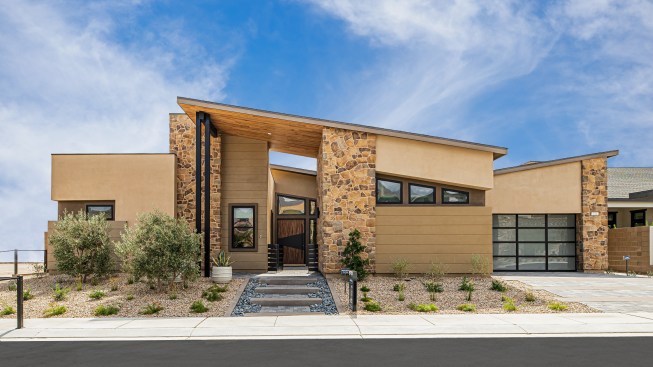
Courtesy of Mona Shield Payne Photography for Tri Pointe Homes
Carlisle Ridge at Summerlin in Las Vegas.
What makes the Vegas market different?
One point worth underscoring is how dynamic and segmented the Las Vegas market truly is, particularly at the luxury end. In this region, luxury generally starts around $1 million, but demand constantly shifts. That’s exactly why range and readiness matter. We’re structured to succeed across segments, not chase one moment in the cycle. Luxury requires experienced teams who understand how to build, sell, and support that level of product. It takes a robust design studio and a brand that buyers trust. Tri Pointe has earned that credibility in Las Vegas.
From a land perspective, Summerlin is an area of the Las Vegas market that remains a core focus for us, but we also have a great position in the Northwest that drives a large share of our volume, along with selective acquisitions across the valley. Our product mix, land strategy, and culture of innovation help us shape the future of this market, rather than just participate in it.
What do you expect for 2026 in Vegas?
We’re expecting a more stable macro environment in 2026 than a year ago—that’s good news. Last year, consumer confidence was the main barrier, not qualification. But we’re seeing that improve as economic concerns ease up. Relocation demand is also expected to rebound after dipping a bit recently. Las Vegas is an attractive destination, and we continue to see balanced demand from both local and out-of-state buyers.