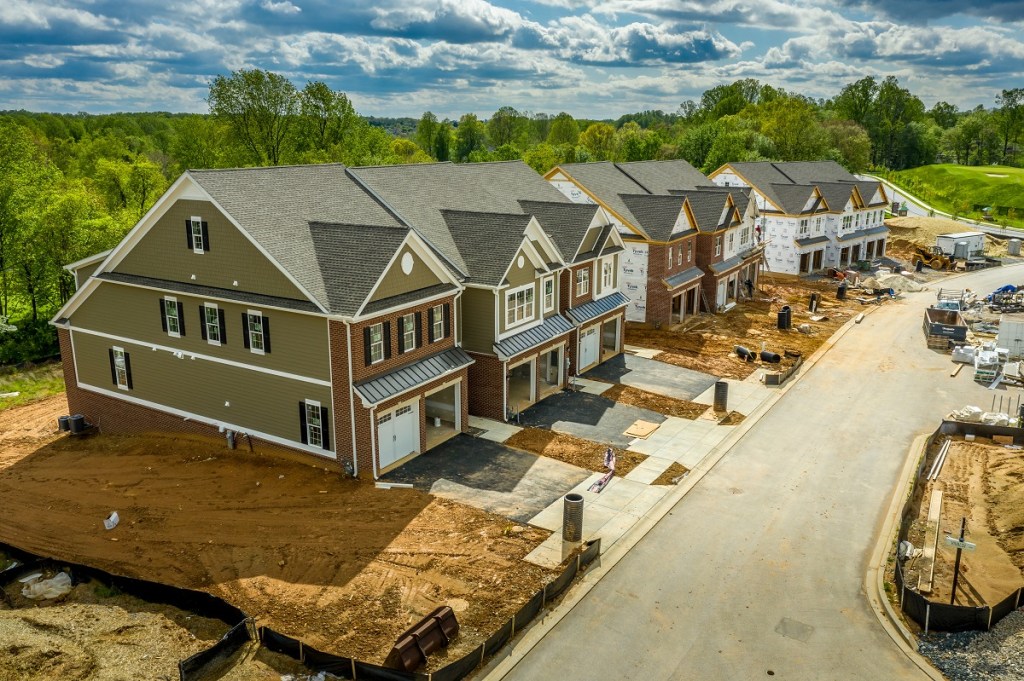
The latest Zonda research on attached versus detached performance shows a notable convergence in sales rates alongside widening differentials in key markets. While detached homes continue to anchor the for-sale ecosystem, attached product has carved out an increasingly competitive position, particularly in high-cost and land-constrained metros.
Sales Rates Narrow the Pandemic-Era Gap
During the pandemic, detached homes surged ahead, buoyed by an unprecedented buyer desire for space and historically low mortgage rates. But as financial conditions shifted, so did relative performance. By 2024 and 2025, national sales rates for attached and detached products had nearly converged. The two product types are tracking more closely now than at any time since the mid-2010s.
This narrowing gap reflects the recalibration happening within buyer budgets. With mortgage rates holding higher and price ceilings tightening, shoppers are reassessing what they can comfortably take on. Attached homes offer a lower absolute entry point and a smaller ongoing cost footprint in many markets, which is helping stabilize sales even as detached slows.*
Where Attached Homes Outperform
Across the top 15 metros for attached sales rates, all but two reported faster absorption for attached homes than for detached. Importantly, attached does not dominate supply in most of these same markets, meaning the outperformance is demand-driven rather than inventory-driven.
The strongest concentration of outperformance is in the Carolinas, Florida, and select Mid-Atlantic markets. These regions combine robust population growth, undersupplied lot pipelines, and significant affordability challenges. Buyers in these markets face real barriers to purchasing detached homes, and the sales data shows they are willing to pivot when pricing premiums become too steep.
Further, this divergence is most pronounced in areas where the median price spread between detached and attached homes has grown to $150,000 or more. Provo, Utah; Richmond, Virginia; Washington D.C.; and San Diego stand out as places where detached prices significantly exceed attached alternatives. In these markets, attached homes aren’t simply competing; they are capturing meaningful share by delivering a more attainable payment while still offering strong location and community attributes.
For builders evaluating product mix, the differential matters just as much as absolute sales rates. Large gaps often indicate that buyers have hit an affordability ceiling, and attached formats are functioning as the release valve. When price per square foot spreads also narrow, as they have in most of these high-differential markets, the value proposition of attached becomes even more compelling.
Strategic Considerations for Builders
The convergence of sales rates and widening differentials points toward several strategic takeaways:
- Prioritize density in markets with persistent lot scarcity and significant detached premiums.
- Use differential performance as a signal for where product mix needs recalibration.
- Recognize that while consumer preference leans detached, willingness to purchase attached rises sharply once pricing spreads exceed key affordability thresholds.
Detached homes will continue to define ownership aspirations. But the sales data makes clear that attached products have evolved into an essential tool for maintaining absorption in higher-cost, supply-constrained regions.
*Property taxes and insurance costs often pressure the monthly housing cost, though.
The insights in this article were taken from more in-depth research reports published in Zonda’s National Outlook.