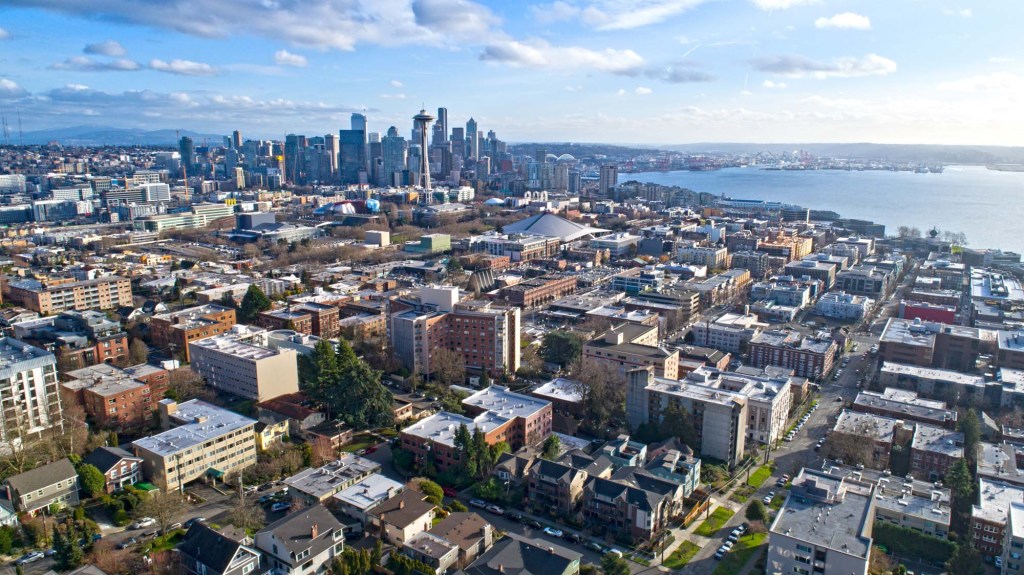
The Seattle housing market is entering 2026 with a mix of familiar challenges and emerging pressures. While lower mortgage rates have improved purchasing power and buyer hesitancy, local layoffs and rising inventory continue to shape a market defined by caution.
Affordability Improves, But Confidence Has Not Caught Up
Interest rates began the year in the low 6% range, drifting down from the mid 6% averages of 2024 and 2025. Even small rate movements materially impact buying power: a typical Seattle-area buyer who qualified for a $750,000 home at a 7% rate last spring can now afford roughly $820,000—an 8% to 11% increase. Still, that affordability boost has not translated into a surge of demand. Consumers remain hesitant, needing not just lower payments but greater financial and economic reassurance before entering the market.
Labor Market Softness Is Shaping Sentiment
Job growth, a pillar of Seattle’s long-term resiliency, slowed significantly in 2025. Overall and high-income job growth was flat in Seattle year over over, which put a damper on new housing demand. Unsurprisingly, more recent job cuts from companies like Amazon and Meta, negative headlines, and uneven employment momentum are playing directly into weakened consumer confidence and slower home sales.
Sales Remain Muted as Supply Climbs
Nationally, existing-home sales sit at their lowest point in three decades nationally, with new-home sales hitting a 3-year low. Seattle mirrors this trend with annual sales are down year over year among most top builders. Builders are offering aggressive incentives and select price adjustments, yet traffic remains subdued—another indicator of buyer uncertainty.
Part of the challenge is rising competition. Nearly three quarters of major markets now carry more inventory than in 2019, including Seattle. Higher levels of quick move-in homes paired with a sales rate hovering between 1 and 1.5 demonstrate the disconnect between available product and buyer urgency.
What’s Selling—and Where
Sales activity is still materializing in specific price bands and product types:
- Entry-level (the bottom third of all actively selling new-home projects, or new homes priced below $725,000): Attached and smaller detached homes dominate, with 47% of local best sellers under 2,000 square feet. Public builders control most of this segment, and Snohomish and Pierce counties lead activity.
- Move-up/move-down ($725,000 to $1.05M): This segment is 80% detached, and many communities fall in the mid-$800s. Master-planned communities such as Tehaleh and Ten Trails continue to draw interest.
- Highend ($1.05M+): Concentrated largely in King County, this segment includes a near-even split of attached and detached product. One third of homes sell above $1.5 million and 50% are at least 2,500 square feet or larger.
These patterns highlight a market where buyers are still active, but decisively selective—gravitation toward value, location, and lifestyle remains strong.
A Young Market with Long-Term Strength
Seattle’s demographics remain a strategic advantage: Millennials and Gen Z together comprise roughly half the local population. These cohorts represent the region’s emerging first-time and move-up buyers, yet many are delaying purchases as they balance affordability constraints with broader economic uncertainty. The long-term demand story remains favorable, but in the near term, younger buyers are contributing to the slower traffic environment.
Looking Ahead: Stability Is the Missing Ingredient
Key risks on the horizon include potential job losses, immigration policy changes (especially meaningful in a market with high H1B concentration like Seattle), and tensions between return-to-office trends and existing housing patterns. Even so, pent-up demand remains substantial; consumers can re-enter the market quickly once conditions begin to stabilize.
These insights were pulled from Zonda’s latest research presented at Seattle Dealmakers in late January.