Build‑to‑rent (BTR) has moved well beyond one‑off communities. Today’s developers are often delivering multiple projects at once, across multiple markets, and that scale is changing the role of fixtures, furniture, and equipment (FF&E).
What was once a late‑stage decision now influences construction schedules, supply chain risk, and resident readiness. Megan Fry, residential lead at Empire & Co., sees firsthand how procurement timing can make the difference between units ready and units leasing.
With all eyes on the BTR industry and the potential legislation, Fry shares how BTR growth is pushing developers toward earlier, more centralized, and more coordinated approaches to FF&E planning and procurement, especially if timelines eventually tighten.

Courtesy Empire & Co
Megan Fry
How is BTR demand growth forcing developers to rethink their approach to FF&E planning and procurement?
The current demand for rental housing is really the result of several trends coming together at once. The median age of first-time home buyers reached 40 in 2025, which is an all-time high, according to the National Association of Realtors. It’s worth noting that affordability challenges and rising home prices are a big part of that. Many people are renting longer than previous generations, and some are choosing rental housing intentionally because it offers flexibility and a lifestyle that works for them.
At the same time, developers are moving quickly to build new BTR communities to meet that demand. As the sector grows, FF&E simply can’t be treated as the final step in the development process anymore.
When developers are building multiple communities at once, FF&E decisions have a real impact on project timelines, budgets, and lease-up performance. With ongoing supply chain variability and product lead times to consider, procurement strategies really need to be coordinated much earlier than they were in the past.
The projects that tend to run the most smoothly are the ones where design, procurement, logistics, and installation are all part of one coordinated strategy rather than a series of handoffs between different teams.
What’s driving developers away from fragmented regional sourcing and toward more centralized, nationwide supply chains?
As BTR portfolios expand into multiple markets, sourcing FF&E locally for each individual project can quickly become difficult to manage. Developers are increasingly looking for ways to create more consistency across their communities while also keeping costs and timelines under control.
Centralized sourcing strategies make that much easier. They allow developers to leverage their purchasing power, maintain consistent quality standards, and simplify communication across project teams. Just as importantly, they provide better visibility into lead times, inventory availability, and logistics planning—things that become critical when several communities are under construction at the same time.
When procurement is spread across multiple regions or vendors, coordination challenges can add up quickly. A more unified approach helps reduce risk while also ensuring residents have a consistent experience across a developer’s portfolio.
Many developers still source FF&E project by project. Why does that model hurt long-term ROI in BTR communities, and what does a scalable procurement strategy look like instead?
A project-by-project approach can create a lot of unnecessary repetition. Each new community often involves reselecting products, renegotiating pricing, and coordinating with entirely new vendors. Over time, that fragmentation can make replacements, maintenance, and renovations much more complicated, and more expensive.
A scalable procurement strategy takes a different approach by treating FF&E as part of a broader portfolio strategy. Developers establish core design standards and product libraries that can be repeated across communities while still allowing flexibility where it makes sense.
That kind of structure improves purchasing leverage and makes life much easier for property teams once communities open. When furnishings and materials follow consistent specifications, it simplifies everything from maintenance to future refreshes and replacements.
When developers build multiple BTR communities across different markets, what are the biggest logistical or supply chain challenges they face?
One of the biggest challenges is simply keeping multiple timelines aligned. Construction schedules, procurement lead times, delivery coordination, and installation all need to move together for projects to stay on track.
BTR developments are somewhat unique because they sit at the intersection of residential living and commercial-scale development. A single community might involve furnishing hundreds of units along with leasing offices, amenity spaces, and outdoor areas—all within tight construction schedules.
Managing furniture orders at that scale across multiple markets adds another layer of complexity. Procurement schedules have to align with construction milestones, and teams also need to think about receiving, staging, and installation logistics. If furniture arrives too early, storage becomes an issue; if it arrives too late, installation windows can be missed and lease-ups delayed.
That’s why strong coordination between design, procurement, logistics, and installation is so important. When those pieces are aligned early in the process, it becomes much easier to navigate supply chain variability and keep projects moving forward.
How can developers balance standardization for scalability with the need to create locally relevant designs that resonate with renters in different markets?
The most successful BTR programs tend to follow what I like to call a “standardized framework with localized expression.”
Developers often standardize the structural elements of their design programs, such as core furniture packages, durable materials, and amenity infrastructure. From there, they can personalize certain layers of the design to reflect the local community. Artwork, color palettes, textiles, and decorative details can help create a sense of place that connects to the surrounding neighborhood.
This approach allows developers to benefit from the efficiency of repeatable standards while avoiding environments that feel overly uniform. Renters want consistency in quality, but they also appreciate spaces that feel unique and connected to where they live.
We’re seeing a big shift toward amenity-driven communities. How are FF&E decisions evolving to support amenity-first design in BTR developments?
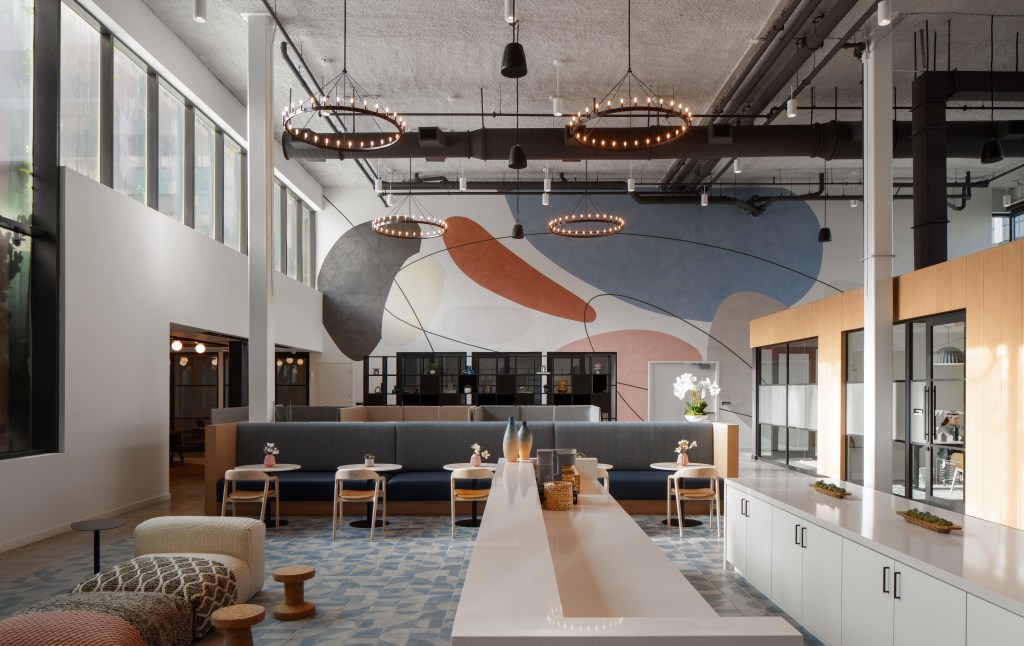
Amenities have become one of the biggest differentiators in the BTR market. Rather than being occasional gathering spaces, many amenity areas are now designed as everyday extensions of residents’ homes.
Because of that, FF&E selections are increasingly focused on flexibility, durability, and hospitality-level comfort. Furniture needs to support a range of activities throughout the day, from remote work and meetings to socializing or wellness activities.
Another notable shift is the integration of technology into furnishings. Built-in charging capabilities in tables, seating, and workspaces are quickly becoming expected features rather than nice-to-have extras. These details help residents stay connected whether they’re working, relaxing, or spending time in shared spaces.
What are some examples of amenity spaces or interior features that are proving especially effective at driving lease-ups in today’s BTR communities?
Amenities that support both lifestyle and connection tend to resonate most strongly with renters. Flexible coworking lounges, hospitality-style clubhouses, fitness and wellness areas, and outdoor social spaces like fire pits are consistently popular because they extend the living environment beyond the individual unit. We’re also seeing interest in more specialized amenity spaces such as golf simulator rooms or podcast recording studios.
At the same time, communities are designing amenities that support hybrid lifestyles. These are places where residents can work during the day and socialize in the evening. Outdoor gathering areas, pet-friendly spaces, and multipurpose entertainment zones are also increasingly common, helping foster a sense of community that can influence both leasing velocity and long-term resident retention.
Technology plays a growing role as well. Features like smart locks, mobile access controls, and digital entry systems for parking garages and shared amenities are quickly becoming baseline expectations. They help residents feel secure while also aligning with the convenience and connectivity many renters expect today.
The designer–developer–vendor relationship can sometimes become complicated. What are the biggest execution challenges in that triangle, and how can integrated teams reduce the “too many cooks in the kitchen” problem?
Each group involved in a project naturally has its own priorities. Designers are focused on protecting the vision of the space, developers are managing budgets and timelines, and vendors are working through product availability and logistics.
Without strong coordination, those priorities can sometimes clash. That’s especially true if substitutions or schedule changes happen late in the process.
Integrated teams tend to avoid many of those challenges by establishing clear communication and decision-making pathways early on. Bringing designers into the conversation sooner, aligning procurement with construction schedules, and ensuring everyone has visibility into key milestones can go a long way toward preventing misalignment.
When everyone understands their role and has the information they need, projects tend to move much more smoothly.
As BTR continues to mature as an asset class, what innovations in FF&E sourcing, design coordination, or supply chain strategy do you think will define the next generation of residential developments?
As the sector continues to grow, we’re likely to see developers think more in terms of portfolio-level strategies rather than individual projects. That means more standardized design programs, earlier collaboration between development and design teams, and stronger coordination between procurement, logistics, and installation. We’re also starting to see digital tools that connect floor plans, specifications, and ordering systems, which can significantly streamline the process.
Ultimately, the next generation of BTR developments will be defined not just by design but by efficiency. The developers who stand out will be the ones who can deliver consistent quality across multiple markets while still adapting to local preferences and evolving renter expectations.
What is something often overlooked when it comes to FF&E in BTR?
One area that doesn’t always get as much attention is what happens after the community opens.
Because BTR developments are long-term operating assets—similar in many ways to hospitality or office environments—it’s important to think about durability, maintenance, and future replacement cycles when selecting FF&E. Standardized programs boost efficiency for property teams by reducing operational complexity and helping maintain consistency across communities.
As BTR portfolios continue to expand across the country, that operational perspective will likely become just as important as the initial design and procurement process.
To connect suppliers with purchasing executives, Zonda is hosting BTR Connections in Phoenix, Arizona, on April 12 and 13 ahead of the Build-to-Rent Conference.