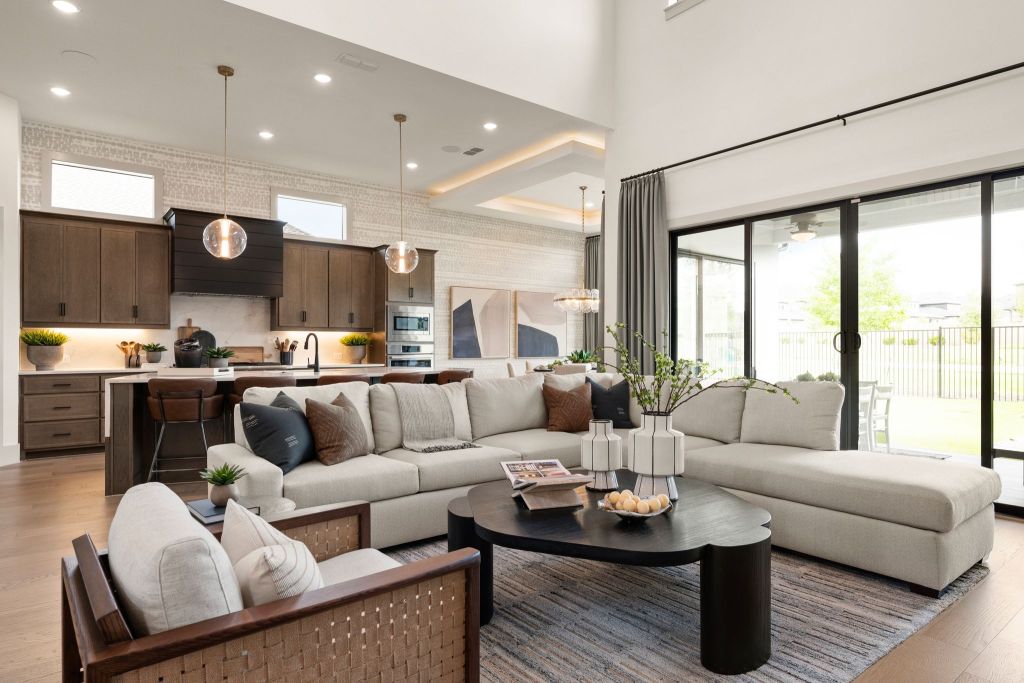
Today’s home buyer is no longer discovering a model for the first time at the front door. For builders and designers, that shift is redefining how model homes are conceived, merchandised, and marketed. Spaces must now resonate just as strongly on a screen as they do in person.
In this Q&A, Creative Design’s Meghan Elliott, design director, and Megan Calmes, director of sales and marketing, share how the rise of the “hybrid buyer” is influencing everything from layout and color strategy to digital merchandising tools—and what builders need to prioritize as online and in-person experiences become increasingly intertwined.
Based on what you’re seeing, how is the “hybrid buyer” changing model home design for 2026 and beyond?
The hybrid buyer is reshaping model home design because they experience the home in layers—first digitally, then in person. They’ve already toured the floor plan online, studied the finishes, and compared options before ever stepping into the sales office. That means the model has to succeed on screen and in real life. We’re placing greater emphasis on flexible spaces that clearly communicate purpose in both formats: home offices that feel truly functional on camera, lofts styled as intentional multiuse zones, and secondary bedrooms that demonstrate everyday versatility. The hybrid buyer isn’t just admiring the space—they’re evaluating how it supports remote work, multigenerational living, and shifting lifestyle needs.
How do you approach designing a model home that works both in person and on camera?
When it comes to model home merchandising, our job is ultimately to help the builder sell homes—whether that buyer first engages online or walks through the front door. First impressions are everything. We aim to create an emotional in-person experience that also immediately captures attention digitally. Designing “through a lens” adds another layer of complexity. We’re intentional about building in layers, depth, and contrast, and about creating memorable focal points in every room. Every detail matters—from the overall color palette to lighting placement to even the sheen of paint and trim—because all of it impacts how the home feels in person and how it translates on camera.
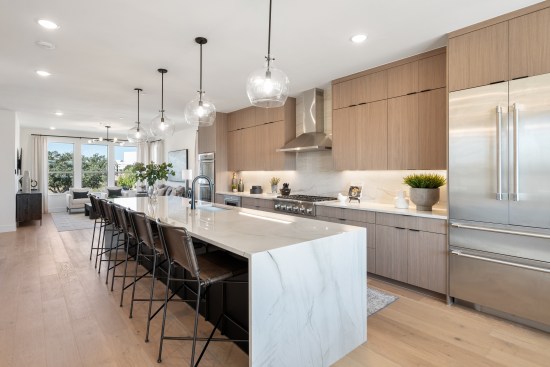
Courtesy Creative Design
Cadence Homes
Are there staging techniques, furniture layouts, or color choices that look better digitally than in person, or vice versa?
Absolutely—one of the biggest mistakes model home builders make is oversaturating a space with color. Neutrals layered with intentional pops of color and contrast tend to photograph far better than bright color used throughout. The same goes for accessories. Over-accessorizing or adding too much art can make a room feel cluttered and overwhelming through a lens. It’s more impactful to create a few strong, focused moments rather than many small ones competing for attention. Cohesion across the entire home is also key. Each space should feel intentional and connected, which ultimately strengthens the marketing visuals and reinforces the overall story of the home.
Any emerging trends in digital-first merchandising you think builders should know about?
While virtual walk-throughs have been around for some time, I believe they’re a significantly stronger communication tool than photography alone. They allow a digital buyer to experience something much closer to an in-person visit—to move through the space, understand scale, and start imagining themselves living there. That emotional connection is hard to create with still images alone.
Interactive floor plans and configurators are also incredibly valuable. Giving buyers the ability to toggle options on and off, customize finishes, and even space plan rooms creates a sense of ownership early in the process. It shifts the experience from passive viewing to active participation.
Shoppable digital merchandising is another important evolution. When buyers can explore options and pricing transparently—without the immediate pressure of a sales meeting—it builds trust and confidence.
And of course, AI is advancing quickly. We’re now seeing tools that can help buyers identify their design style and preferences, then suggest finishes and products that align with both their aesthetic and their budget. Integrating AI-assisted recommendations into the options process has the potential to significantly improve the user experience and, ultimately, overall buyer satisfaction once the home is complete.
Have you had to adjust standard design practices because of digital-first priorities?
Yes—we have to be much more intentional with our selections and finishes. Something that reads beautifully in person can fall completely flat online. It’s critical to incorporate strong contrast, clear focal points, and fewer, more impactful accessories.
For example, textured wallpapers can look stunning in person, but bold patterns tend to stand out more effectively in photography. Even technical details matter—trim painted in a dark finish should typically be flat to avoid highlighting wall imperfections or creating overly reflective surfaces on camera.
Scale is another major consideration. Furniture that is undersized can actually make a space feel smaller, especially in photography. Rooms feel most comfortable and expansive when furnishings are proportionate to the architecture. Designing for digital requires that level of precision, because the camera amplifies both the strengths and the weaknesses of a space.
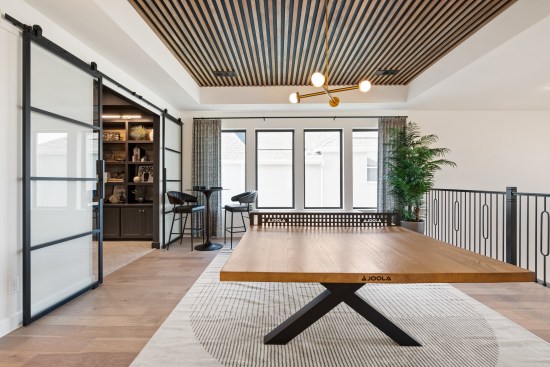
Courtesy Creative Design
Britton Homes
Are there lessons you can share about what builders often overlook in digital merchandising?
Never underestimate the power of a first impression. Photography should be treated as a marketing tool, not just a form of documentation. Whenever possible, always stage a model home—buyers struggle to understand scale without furniture, especially online. Dimensions alone don’t create an emotional connection.
Large, open-concept rooms also need to be clearly defined so function is immediately understood; you can’t rely on square footage alone. And consistency is key—styling across models should reinforce a cohesive brand identity. Each model should maintain a similar level of visual elevation and interest, ensuring that every space feels intentional and thoughtfully curated.
How do you see model home design evolving over the next three to five years as digital-first buyers become the norm?
Our hope is that builders begin to recognize the equal importance of the digital and in-person experience. Historically, model homes were often designed with bold, saturated color stories and a focus on in-person presentation. But as more buyers start their journey online, builders will need to adapt their approach to ensure spaces resonate digitally as well.
We expect to see AI and VR technologies increasingly used to create immersive, customizable experiences that strengthen visual storytelling. Marketing decisions will shift to treating the in-person visit as an extension of the digital journey, ensuring that buyers’ first online impressions translate seamlessly into a memorable, emotionally engaging experience when they walk through the door.