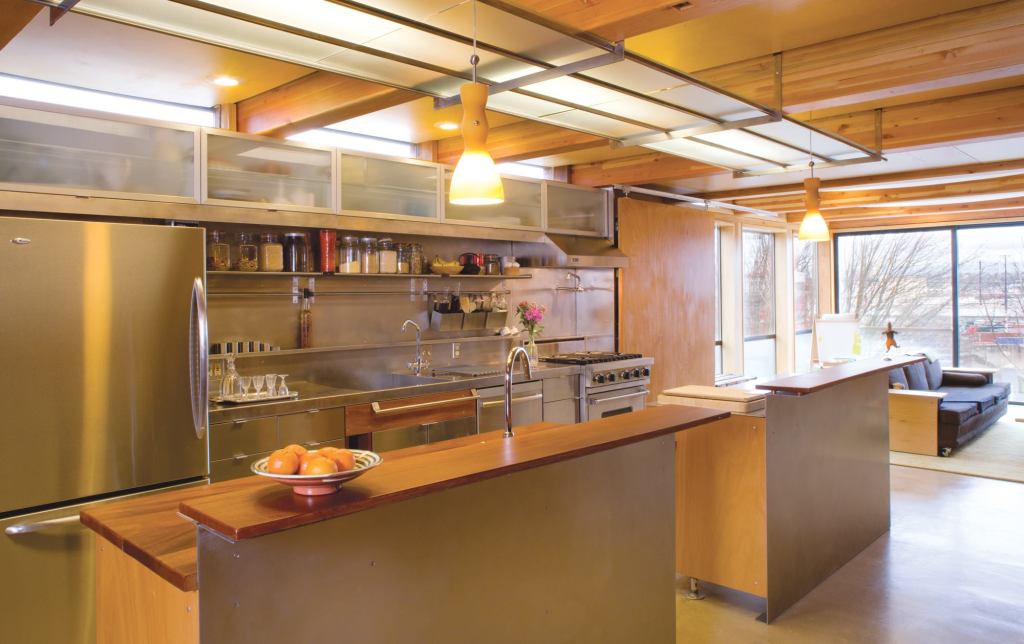
The steep urban infill site for Sean Bell’s new passive-solar home was considered a critical area for mudslides. Compounding the stringent setbacks this dictated was a southern exposure with an ugly view of the freeway. Bell, the architect, developer, and builder of his family’s home, surmounted these tribulations with a plan for a sustainable, kitchen-centric, light-filled house that is 70 feet long and a mere 18 feet wide. He accomplished all this without making the house “feel like a bowling alley.” Sixteen concrete piles driven 30 feet into the hillside anchor the house firmly on its Seattle site. Bell had to orient the windows away from the south, but beefed up sustainability in other ways—tankless hot water, radiant heat, and energy-efficient lighting. But the highest marks on Bell’s scorecard are for cleverly mixing green materials and architectural details that let the long, narrow footprint feel like home. He designed kitchen, dining, and living areas as one big room, but broke up the circulation path. Twin kitchen islands with raised eating bars stop the eye with multiple layers. Bell prefers to leave materials in their natural state so no one has to worry about finishes that off-gas. “I try not to paint anything,” he says. “Most materials have an inherent beauty that you don’t need to cover.”
Builder/Architect: 360 Design Studio, Seattle
Photographer: Lara Swimmer Resources: Cabinets/faucets: Ikea; Range: Viking; Refrigerator: Amana.