Phoenix continues to distinguish itself as one of the nation’s most structurally resilient housing markets. Even as job growth moderates due to national economic volatility and some residential sectors are working through a wave of supply over the past few years, indicators point to an economic and home building engine that remains primed for expansion.
Employment Picture
Phoenix’s underlying strength begins with the labor market. From 2019 to 2025, total employment grew by more than 250,000 jobs, which was over an 11% increase and the second highest rate of growth for metros with at least 2 million employees.
While recent hiring has cooled from the explosive gains of recent years, long-term expectations remain firmly positive. The region is positioned for another wave of high-income job creation once broader economic volatility settles. This stability is supported by an industrial transformation underway across the metro.
Phoenix attracted roughly $114 billion in private manufacturing investment from 2021 to 2024, according to the Investing in America report. That ranked Phoenix the highest of any U.S. metro, driven by reshoring efforts related to advanced manufacturing and clean energy. Those commitments will continue to feed job creation for years, creating durable income growth that directly benefits the housing sector.
Demographic Trends
Population trends reinforce the picture. Arizona remains a top 10 state for growth, adding more than 67,000 residents in 2025 and ranking it seventh overall. Phoenix accounts for over two-thirds of the total state population and is a primary contributor to the overall state growth. Since 2020, Arizona has the fifth largest population growth, adding over 465,000 in residents while only being the 14th largest state.
Migration continues to be the primary driver, with domestic inflows staying positive and international flows expanding, though with recent moderation after rapid increases. The shifting composition, more dependent on immigration, highlights the importance of policy clarity around visas and international hiring, particularly for large employers like advanced manufacturing operators such as TSMC. Nonetheless, Phoenix maintains one of the strongest demographic growth profiles in the country, providing a steady foundation for long-run housing demand.
Income growth has also been a defining advantage. Since 2015, Phoenix incomes have risen 69%, outpacing the national increase of 55%. Even with some home buying affordability challenges, price stabilization is helping incomes realign with housing costs. Many households are recalibrating expectations, including home size and location, and the market is slowly regaining balance as wages catch up.
Housing Situation
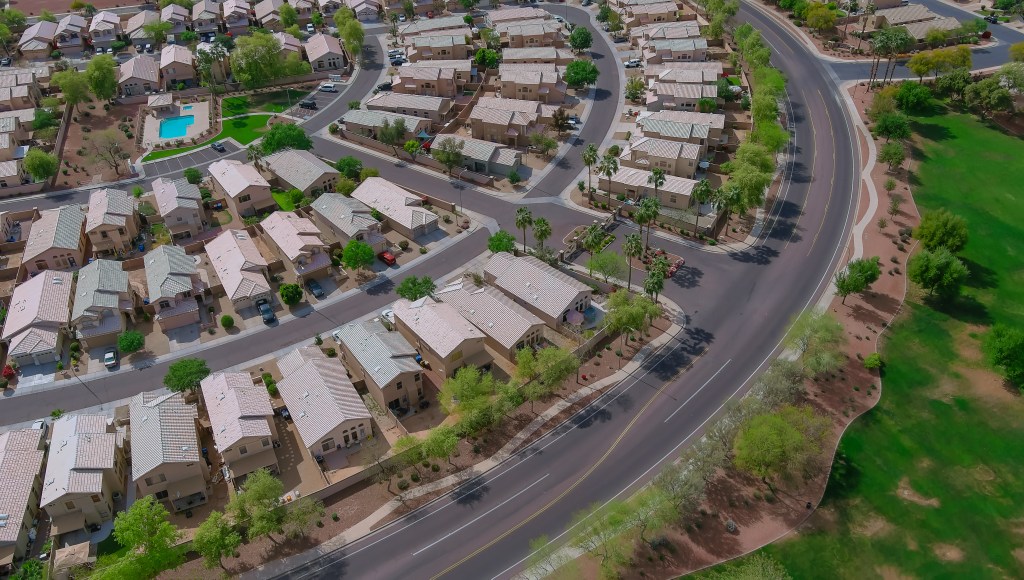
From a housing production standpoint, Phoenix remains one of the most active markets in the nation. It is currently the third-largest, new-home production market, with new homes representing 23% of total closings in 2025, well above the national share at roughly 13%. The greater supply of new homes not only ensures housing options for the increasing population and labor market but also generates significant economic growth throughout the market.
Master-planned communities (MPC) are especially influential in new-home sales activity, accounting for half of all new-home sales in 2025. The market’s future land pipeline is similarly robust. Nearly 350,000 future MPC units are planned in active and upcoming communities, giving Phoenix one of the longest development runways in the country and the ability to meet the demands of an increasing population.
Supply dynamics do vary by residential housing sector though. Phoenix leads all other metros by a wide margin in active BTR units, with tens of thousands of rentals coming online over the past few years. The market is expected to experience a strong pullback in deliveries in 2026, which will allow the large supply brought online since 2020 to stabilize. Multifamily, after peaking in 2024, is projected to see a significant 67% pullback in deliveries by 2026.
Together, these shifts signal that today’s temporary oversupply phases in several segments will ease over the next 12 to 24 months. Demand remains strong enough to absorb available inventory, especially as job and population growth continue.
Market Outlook
Looking to the year ahead, housing activity in Phoenix is expected to track closely with national trends, which are expected to be similar to 2025 for housing prices, sales, and starts. Due to the strong fundamentals discussed, though, it does have upside potential.
The long-term outlook remains firmly constructive: a resilient labor market, strong migration flows, a deep development pipeline, and significant pent-up demand all support ongoing expansion. As affordability gradually improves and supply normalizes, Phoenix is positioned not just to stabilize but to strengthen.
The insights in this article were taken from a Zonda presentation in early 2026.