In a market where buyers are budget-conscious, and decision cycles can be unpredictable, it’s often the experience of a home—not just the floor plan—that closes the gap. Zillow’s 2024 New Construction Consumer Housing Trends Report underscores how intensely buyers are watching costs, with 89% of new construction buyers saying staying within their initial budget is highly important, which raises the bar for every upgrade to justify itself.
That’s where lighting has quietly evolved. It’s no longer just a functional spec. Done well, lighting shapes first impressions, supports daily routines, and communicates “this home is thoughtfully built” in a way buyers feel immediately. The shift isn’t simply toward “smart devices,” but toward whole-home lighting consistency: coordinated controls, predictable behavior room-to-room, and a clean, modern finish that reads upscale without being flashy.
Why Lighting Is Gaining Leverage Now
Three forces are converging:
- Buyer expectations are rising—without infinite upgrade tolerance. Builders are being pushed to add perceived value while protecting affordability. Zillow’s report explicitly calls out smart home technology as a feature that can help new construction stand out versus resale—exactly the kind of “harder to find in older homes” advantage builders can lean into.
- Lighting is one of the most “visible” systems in the home. Unlike behind-the-wall features, it’s touched daily, showcased on tours, and noticed in listing media.
- Smart lighting is becoming a gateway, not a gadget. Zillow notes that many homeowners start their smart home journey with smart lights because they’re accessible and expand over time.
The Operational Reality: Smart Can’t Mean “Complicated”
Even if buyers want it, builders—and trade partners—won’t embrace anything that introduces risk: rework, inspection friction, commissioning headaches, or a customer-service burden after move-in.
The most builder-friendly approaches tend to share a few traits:
- Keep rough-in familiar. If installation requires unusual wiring practices, specialized programming, or “one more thing” on trim day, adoption stalls.
- Make the upgrade path predictable. A base spec that looks great and functions intuitively, plus a clear set of upgrade options, protects both margins and schedules.
- Future-proof without over-spec’ing. Buyers’ preferences and platforms change. Systems that can evolve—without reopening walls—help reduce long-term dissatisfaction.
A Modular Model That’s Resonating With Builders
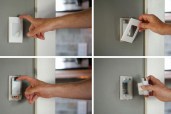
One example of this “builder-first” thinking is Deako, which uses a plug-and-play lighting control approach: the Deako Connector is wired into a standard junction box during install, and switches can be swapped later without rewiring. For builders, the appeal is less about any single smart feature and more about process control: solutions designed to support a “disruption-free build process” while still giving home buyers customization options.
This kind of modular architecture also supports a cleaner long-term upgrade story. For instance, Deako notes that future smart switches can remain compatible with existing connectors—meaning future updates don’t inherently require a rewire.
Practical Ways Builders Can Use Smart Lighting to Differentiate
If you’re considering smart lighting as a spec or option, these moves tend to deliver the best ROI in buyer perception and operational simplicity:
- Start with “high-signal” areas. Great lighting control in the kitchen, main living space, primary suite, and exterior/entry creates an immediate premium feel without trying to automate everything.
- Package options around outcomes, not tech. Buyers respond better to bundles like “Welcome Home,” “Ambiance,” or “Security” than to a menu of devices.
- Design consistency matters as much as features. Matching controls, aligned plates, and a cohesive look across rooms signals quality, especially during tours and in photography.
- Plan for post-close evolution. Buyers may not opt into every feature at contract, but many want the ability to expand later. A system that supports that arc can reduce regret and boost satisfaction.
Lighting is becoming one of the most efficient ways to deliver “premium” in a cost-sensitive environment—because it improves daily living, shows well, and can be implemented in builder-friendly ways. When the strategy is whole-home, consistent, and operationally sane, smart lighting stops being a gadget and becomes a competitive advantage.
To see a modular, builder-oriented smart lighting approach in practice, explore Deako’s builder resources and installation model or book your free 15-minute consultation at Deako.com.