

Harry Whitver
Ceramic tile does not bend or stretch. If a floor sags under fur…
A cracked ceramic tile floor in a kitchen or bathroom is a classic new-home warranty claim. If the framing and subfloor are wood, the culprit usually is one of two flaws: the tile was installed over a floor system with too much deflection, or the tile was bonded to a wood subfloor that expands and contracts at a different rate than the tile.
It’s possible, and all too common, to set ceramic tile using mastic adhesive applied directly to the subfloor over a joist system framed to code minimums. But you shouldn’t do it. Wood floors deflect under foot traffic and furniture loads, but tile can’t bend or flex. Wood expands and contracts in response to relative humidity on a seasonal basis; tile moves at a different rate in response to changing temperatures.
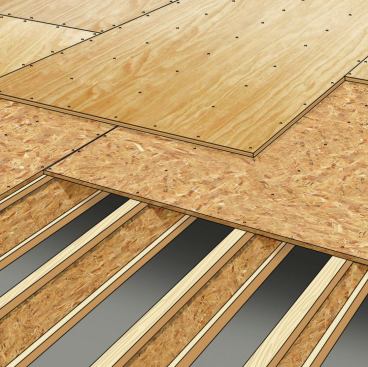
So you need to guarantee two things: the floor system must be stiff and the tile must be free to slip, not bonded directly to the plywood floor.
Size the joists and subflooring according to tile industry specs, not to the standard span tables in your local building code. Be conservative; stiffer is always better. And apply an isolation membrane before you mastic down the tile.
Finally, follow the manufacturers’ instructions to a T when it comes to membranes and mastics.